


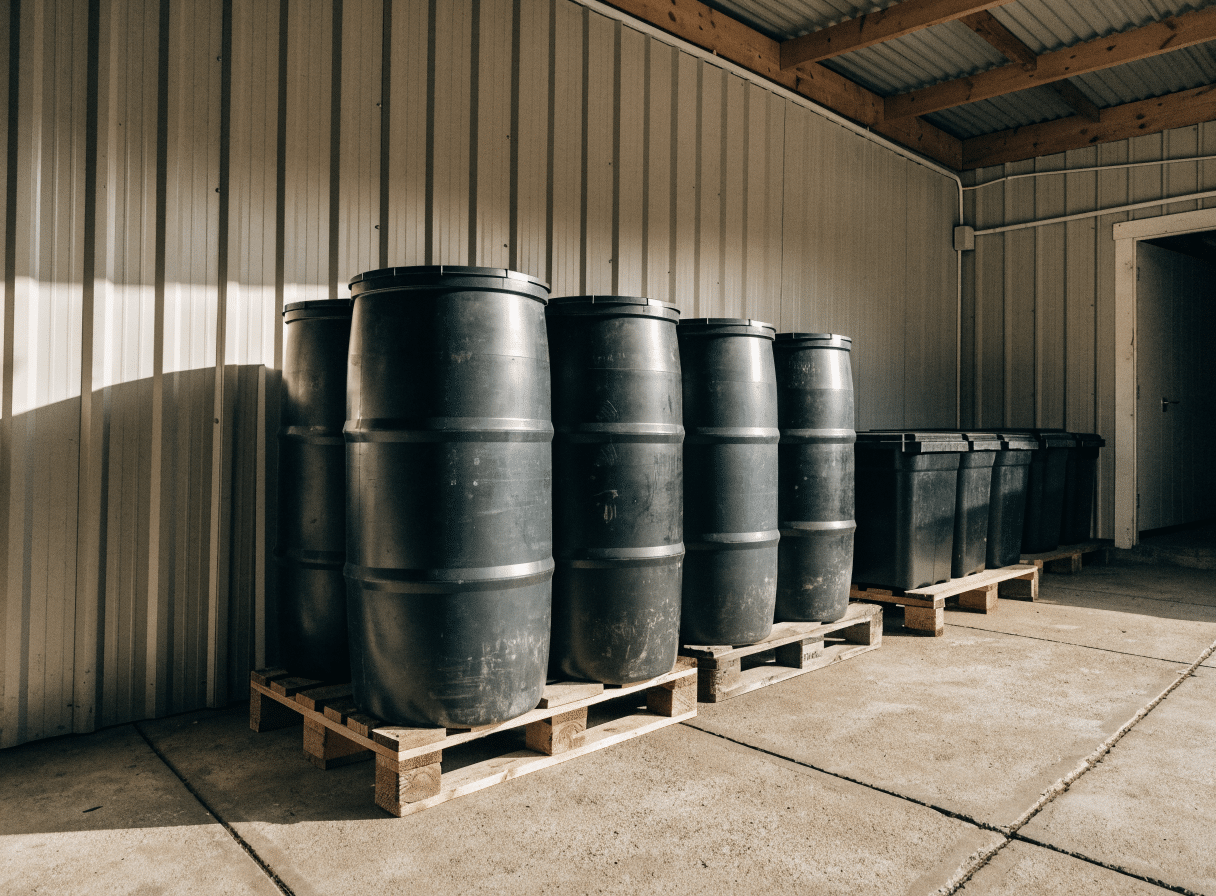
Agricultural chemicals should be stored in a dedicated, secure, well-ventilated area away from heat sources, water courses and general farm traffic, with containers kept sealed, clearly labelled and segregated according to their type. Getting storage right protects your stock, your staff and the wider farm environment, and it keeps you on the right side of good practice expected of anyone handling farm chemicals.
For farms across the UK, chemical storage is not something to bolt on as an afterthought. As harvest winds down and attention turns to autumn treatments and next season’s planning, September is a sensible time to review how chemicals are actually being kept on your holding, not just how they were kept last year.
Why Storage Matters More Than It Seems
Most problems with farm chemicals do not happen during application. They happen in the weeks and months a product sits in a shed, exposed to temperature swings, damp, or simply forgotten at the back of a shelf. Poor storage can degrade active ingredients, damage packaging, and create confusion about what a container actually holds once a label has faded or peeled.
There is also the practical risk of an incident: a leaking drum, a mixed-up product, or an area accessible to children, visitors or livestock. None of these outcomes are acceptable on a working farm, and all of them are avoidable with a proper storage routine.
Choosing the Right Storage Location
A good chemical store on a farm is usually:
- Separate from feed stores, workshops and living accommodation
- Built with a hard, impervious floor that can contain any spillage
- Ventilated, so fumes do not build up in an enclosed space
- Shaded or temperature-stable, away from direct sun and frost
- Secure, with restricted access for anyone who does not need to be there
- Positioned away from watercourses, drains and boreholes
It does not need to be elaborate. Many farms convert part of an existing outbuilding rather than building something new, provided the space meets these basic conditions.
Segregating and Labelling Products
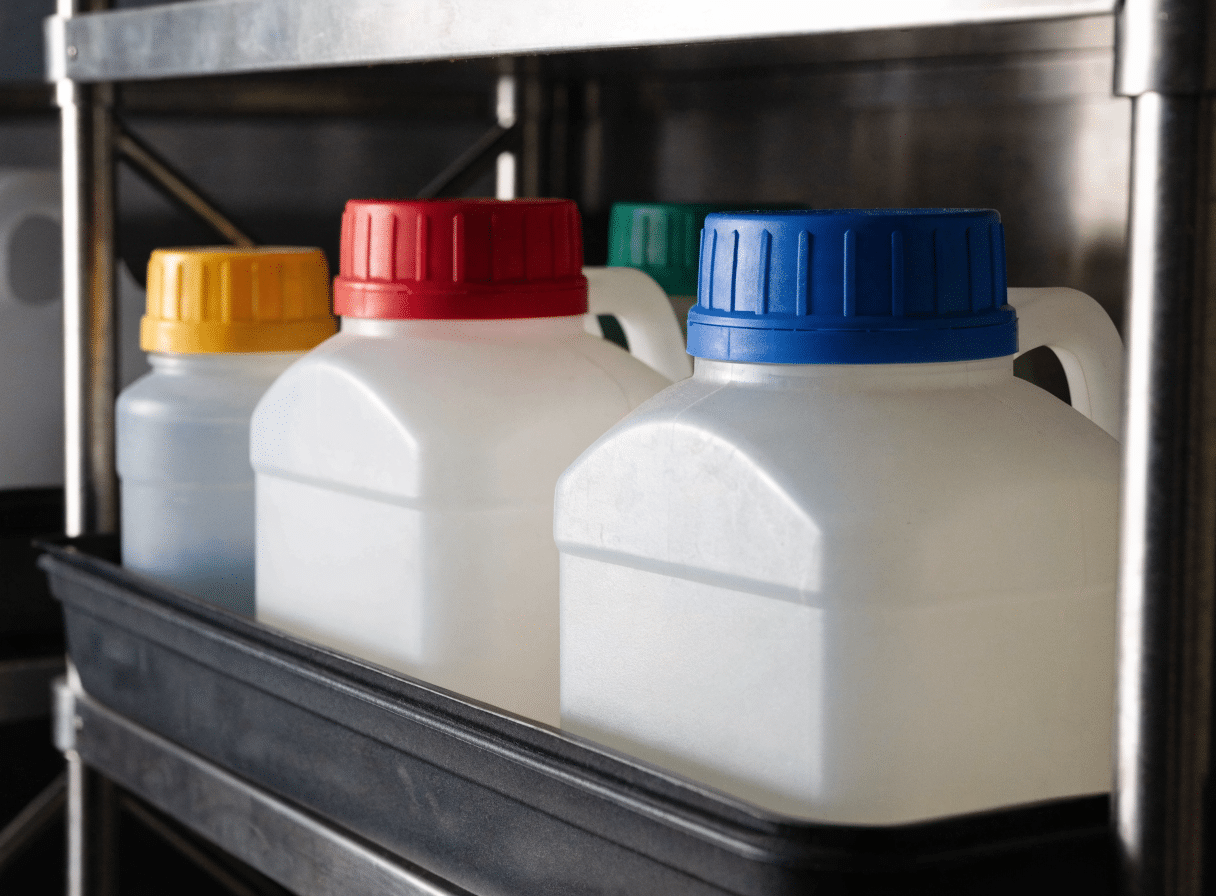
Not every agricultural chemical is compatible with every other one, and mixing incompatible products, even accidentally through a spill, can cause an unwanted reaction. As a general rule:
- Keep herbicides, pesticides and fertilisers in separate areas or clearly marked zones
- Store liquids on shelving or pallets that contain leaks, rather than directly on the floor
- Never decant a chemical into an unlabelled or food-grade container
- Check labels periodically and replace any that have become illegible
- Keep safety data sheets accessible near the store, not filed away in an office
If you are unsure how a particular product should be classified or handled, our safety information page is a useful starting point before you bring new stock onto the farm.
Record Keeping and Stock Rotation
A simple inventory, even a handwritten sheet pinned near the store door, makes a real difference. Note what is held, when it arrived, and roughly how much remains. This helps you spot ageing stock before it becomes a disposal problem, avoid over-ordering products you already hold, and respond quickly if you ever need to confirm exactly what is on site.
Rotating stock so older containers are used first, rather than left at the back, is a small habit that reduces waste and keeps your store easier to manage year-round.
When to Review Your Storage Setup
It is worth reassessing your storage arrangements whenever:
- You change the range of products you use
- You expand acreage or add new enterprises to the farm
- An outbuilding changes use, for example if it starts being used for something else as well
- You bring on new staff or contractors who will need to access the store
| Storage Factor | What to Check | Why It Matters |
|---|---|---|
| Location | Away from water, feed, and living areas | Reduces contamination and cross-use risk |
| Container condition | Sealed, labelled, undamaged | Prevents leaks and product confusion |
| Segregation | Herbicides, pesticides, fertilisers kept apart | Avoids incompatible reactions |
| Ventilation | Airflow present, no enclosed fume build-up | Protects anyone entering the store |
| Records | Simple inventory kept up to date | Supports stock rotation and traceability |
Sourcing Chemicals With Storage in Mind
How a product is packaged and delivered can affect how easily it fits into your storage system. Ordering in container sizes that suit your actual usage, rather than the largest available discount, often makes storage simpler and reduces the amount of part-used stock sitting around. Our agricultural chemical suppliers page outlines the range available to UK farms, and our delivery information page explains what to expect once an order is placed, which is worth checking before you plan storage space for a larger delivery.
Do agricultural chemicals need their own dedicated building?
Not necessarily a standalone building, but they do need a clearly defined, secure area separate from feed, living spaces and general farm traffic, with a floor that can contain spills.
Can different agricultural chemicals be stored together?
Some can, but many should be segregated by type, particularly herbicides, pesticides and fertilisers, since accidental mixing during a spill can cause unwanted reactions.
How long can agricultural chemicals be stored before they go off?
This varies by product, so check the manufacturer’s guidance and label for each item rather than assuming a general shelf life, and rotate older stock to the front of use.
What should I do with old or unlabelled containers?
Avoid using anything you cannot positively identify. If a label has faded beyond reading, treat the contents as unknown and seek advice on safe disposal rather than guessing.
Does storage need to change over winter?
Colder conditions can affect some liquid formulations, so it is worth checking whether any of your stock is sensitive to frost as autumn moves into winter, and adjusting the store accordingly.
Getting Your Storage Right This Season
A well-organised chemical store is one of the simplest ways to protect your stock, your staff and your farm through the coming months. If you are reviewing your setup ahead of autumn treatments, take the time to check locations, labelling and records before new deliveries arrive. For farms across Chorley and further afield looking for a reliable source of agricultural chemicals, visit Easy Chemicals Trade to see the range currently available.