


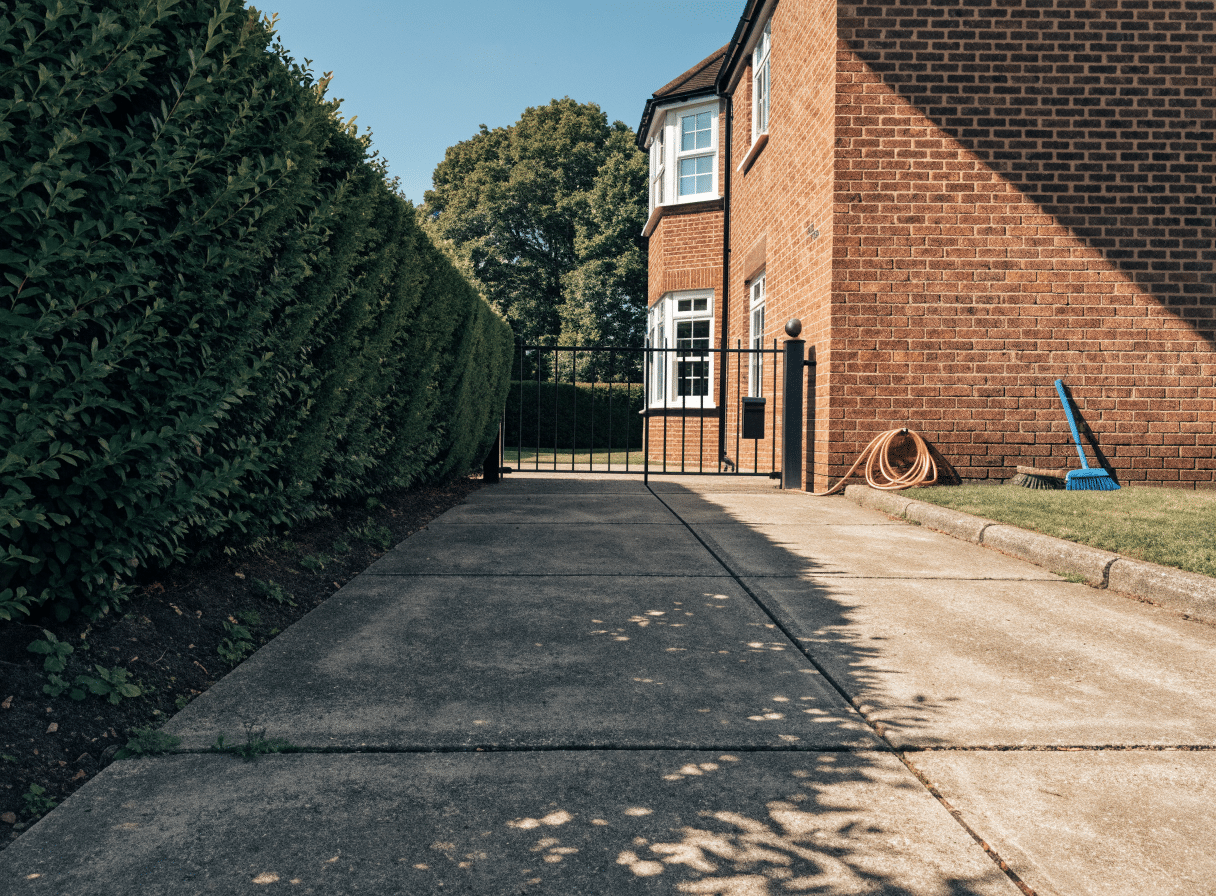
The quickest way to clean a concrete driveway is to sweep away loose debris, apply a suitable concrete cleaning product to break down dirt, moss or algae, then rinse the surface thoroughly with clean water, repeating on stubborn patches before letting the concrete dry fully.
Why Concrete Driveways Get Dirty
Concrete is a porous material, which means it absorbs moisture, oil and organic matter over time. Across much of the UK, damp weather and shaded, north-facing areas encourage moss and algae to take hold, while tyre marks, leaf litter and general foot traffic add to the build-up throughout the year. Left untreated, this can make a driveway look tired and, in some cases, slippery underfoot during wet or frosty spells.
Cleaning a concrete driveway isn’t just about appearance. Regular maintenance helps protect the surface from long-term staining and wear, which can save time and expense later on, particularly for larger commercial or shared driveway areas.
Cleaning Methods Compared
There are several ways to clean a concrete driveway, and the right choice depends on how dirty the surface is, the size of the area and how much time you want to spend on the job.
| Method | Best for | Considerations |
|---|---|---|
| Manual scrubbing | Small areas or light dirt | Time-consuming, low cost, no specialist equipment needed |
| Pressure washing | Larger driveways with moderate grime | Fast results but can wear the surface if used incorrectly |
| Chemical treatment | Moss, algae, oil stains and ingrained dirt | Often used alongside washing for a deeper, longer-lasting clean |
Many driveway owners find that combining a chemical cleaner with a rinse or light pressure wash gives the most thorough result without excessive scrubbing or risking damage to the surface.
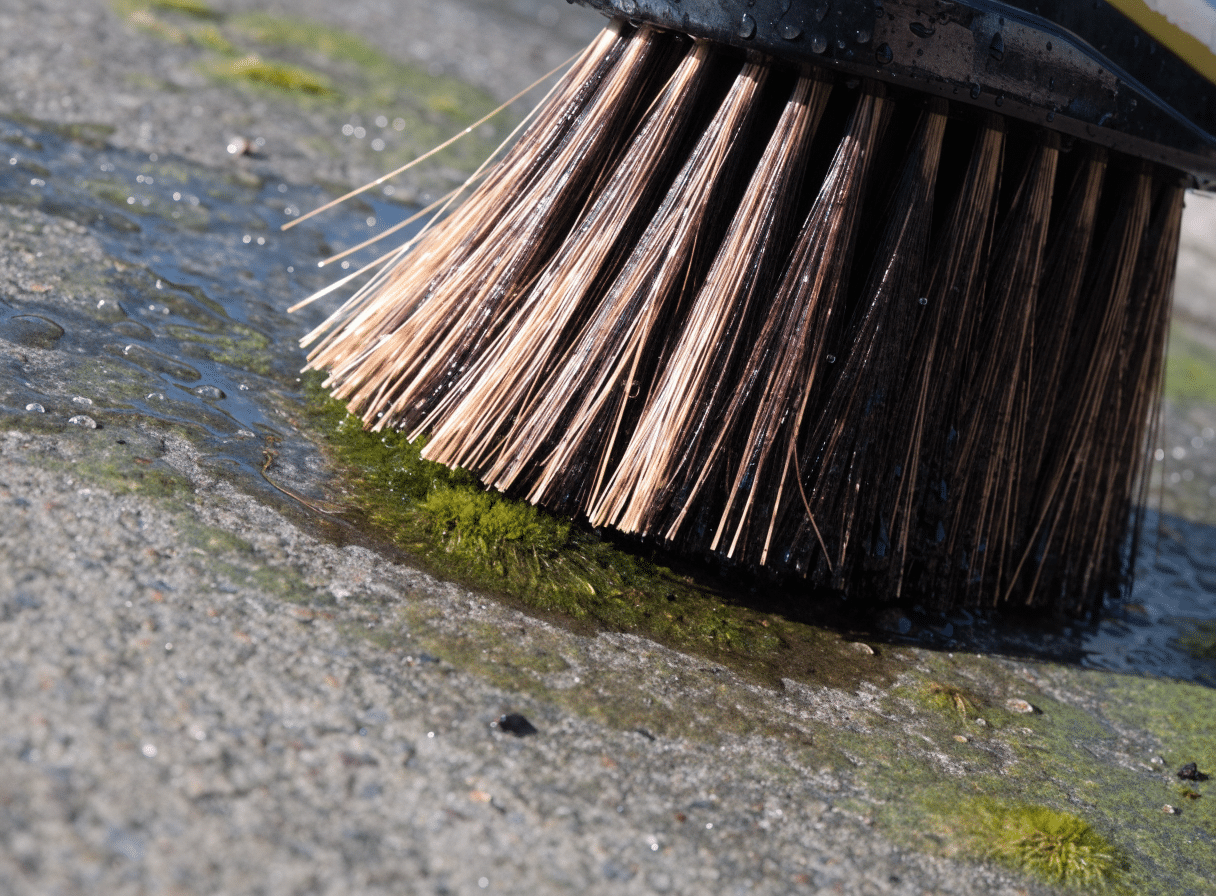
Step-by-Step Guide to Cleaning a Concrete Driveway
- Clear the area. Sweep away loose leaves, gravel and debris before you start.
- Pre-treat problem areas. Apply a concrete cleaning product to patches of moss, algae or staining, following the guidance on the product label.
- Leave to work. Most cleaning solutions need a short dwell time to break down dirt and organic growth.
- Agitate if needed. A stiff outdoor brush can help lift stubborn marks once the product has had time to work.
- Rinse thoroughly. Use clean water to wash away the product along with the loosened dirt.
- Allow to dry. Let the driveway dry fully before parking vehicles or allowing heavy foot traffic.
Working in sections is often easier than tackling the whole driveway at once, particularly for larger residential or commercial areas.
Choosing the Right Concrete Cleaning Chemicals
Not all cleaning products are designed for concrete, and using the wrong one can affect the finish or fail to shift ingrained dirt. It’s worth choosing a product formulated specifically for concrete surfaces, particularly if you’re dealing with oil stains, moss or algae rather than general dust.
Easy Chemicals Trade supplies a range of concrete building materials including cleaning products suited to driveways, patios and other outdoor concrete areas. Always test a small, inconspicuous patch first, and read the safety information provided with any product before use.
Preventing Future Build-Up
Once a driveway has been cleaned, a few simple habits can help keep it looking better for longer. Sweeping regularly, clearing gutters and drains near the driveway edge, and trimming back overhanging plants can all reduce the amount of moisture and debris that settles on the surface. Some property owners also choose to apply a concrete sealant after cleaning, which can make future maintenance easier, though this is a separate step from the cleaning process itself.
When to Call in a Professional
Small driveways with light dirt are usually manageable as a DIY job. However, larger commercial areas, heavily stained surfaces or driveways that haven’t been cleaned in several years may benefit from professional equipment and experience. A specialist can also advise on the most suitable products for the type of staining involved.
If you’re ordering cleaning chemicals in bulk for a trade or commercial job, check the delivery information page for current lead times before you plan the work.
How often should a concrete driveway be cleaned?
This depends on the location and weather exposure, but many homeowners find an annual or twice-yearly clean keeps moss and staining under control.
Can pressure washing damage concrete?
Used incorrectly, high-pressure water can wear away the surface of older or weaker concrete. Using a lower pressure setting and keeping the nozzle moving helps reduce this risk.
What removes moss from concrete driveways?
A concrete cleaning product designed to tackle moss and algae, combined with scrubbing and a thorough rinse, is generally effective. Persistent moss may need repeat treatments.
Do I need special chemicals for concrete cleaning?
General-purpose cleaners can help with light dirt, but products formulated for concrete tend to perform better on ingrained stains, oil marks and organic growth such as moss and algae.
Is it safe to clean a driveway myself?
Most homeowners can clean a driveway by following the instructions on the product label and using appropriate protective equipment. For larger or more complex jobs, professional help may be worth considering.
Getting the Right Supplies
A clean, well-maintained driveway starts with using the right products for the job. Whether you’re managing a single residential driveway or a larger commercial area, choosing a concrete cleaner suited to the surface makes the process quicker and more effective.
Easy Chemicals Trade supplies concrete cleaning chemicals and other building chemicals to trade and commercial customers across Chorley and the wider UK. Visit Easy Chemicals Trade to browse the range and find products suited to your next cleaning job.